

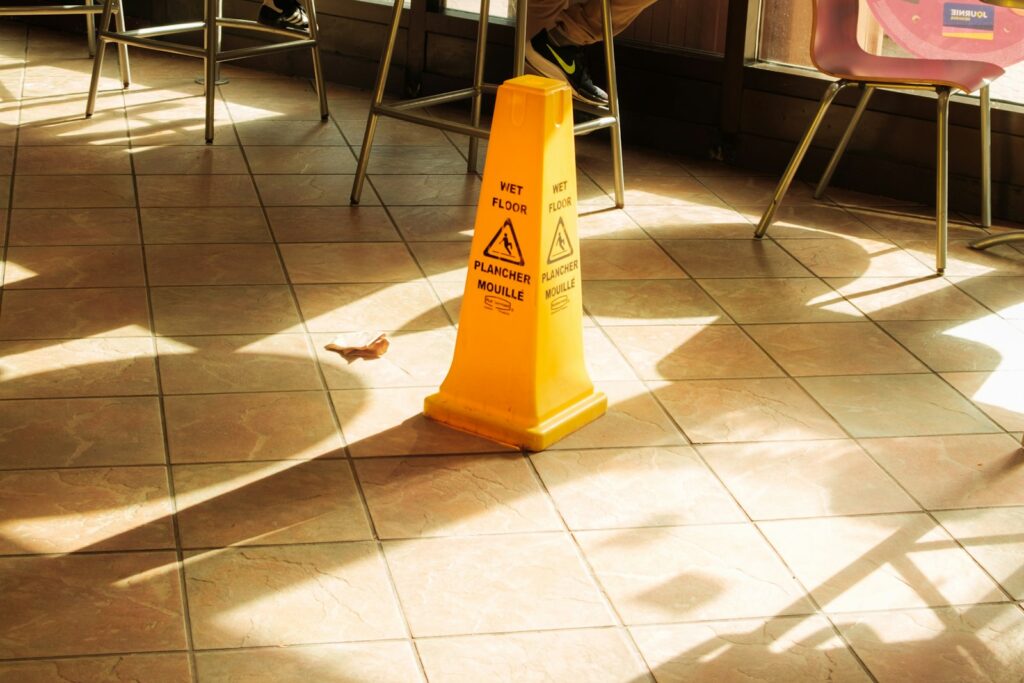
You fell on someone else’s property. A wet floor with no sign, an uneven step, an icy walkway, a parking lot that was never salted. Your first instinct is that the owner is responsible. Sometimes that is right. Often the picture is more complicated, and identifying the correct defendant is one of the first things a lawyer has to do, because suing the wrong party wastes time you may not have.
The Occupiers’ Liability Act
Ontario’s Occupiers’ Liability Act sets the basic rule. An occupier of premises owes a duty to take reasonable care to see that people entering the property are reasonably safe. The key word is occupier, not owner. An occupier is anyone in physical possession of the premises, or anyone with responsibility for and control over its condition, the activities carried on there, or who is allowed to enter. There can be more than one occupier of the same property at the same time.
The duty is one of reasonable care, not perfection. A property does not have to be free of every hazard. The question is whether the occupier had a reasonable system in place to identify and address hazards, and whether that system was followed. A store that inspects its floors on a schedule and documents it is in a very different position from one that does nothing.
Owners and tenants
For commercial premises, the tenant operating the business is usually an occupier of the interior and often of areas immediately outside. The landlord may retain responsibility for common areas, structural elements, and, depending on the lease, exterior maintenance. In residential rental buildings, the landlord is generally responsible for common areas, hallways, stairs and the grounds, while the tenant controls the inside of their unit.
Leases and maintenance agreements frequently allocate these responsibilities, and those documents are obtained early in a claim. A fall in a plaza parking lot may involve the plaza owner, the store nearest the fall, and the property manager, each pointing at the others.
Snow removal and maintenance contractors
Where an occupier hires a contractor to clear snow and ice, maintain floors or manage the property, that contractor can be liable for its own negligence. The occupier does not escape liability simply by hiring someone, but the contractor becomes an additional defendant. Winter falls in particular often involve a snow removal company whose contract specifies when and how it was required to clear and salt, and whose logs show whether it did.
Condominiums
In a condominium, the corporation is typically the occupier of the common elements, including lobbies, hallways, garages and outdoor areas. Unit owners are responsible for their own units. Condominium corporations usually carry insurance and often have property management companies involved, which can add another party.
Municipalities
Falls on public sidewalks and roads are treated differently. A municipality is only liable for a sidewalk fall caused by snow or ice if it was grossly negligent, a much higher bar than ordinary negligence. Municipalities also require written notice of a claim within a short period after the fall, and failure to give it can end the claim unless there is a reasonable excuse and no prejudice. We have written separately about the notice requirements and limitation periods that apply to slip and fall claims, including the shortened notice period for private-property snow and ice claims.
What about your own conduct?
Ontario applies contributory negligence. If you were looking at your phone, wearing footwear unsuited to the conditions, or ignored a warning sign, a court may reduce your damages by a percentage reflecting your share of responsibility. That is a reduction, not a bar. A claim can still succeed where the injured person was partly at fault.
Proving the case
Liability in slip and fall cases is won on evidence gathered early. Photographs of the hazard and the surrounding area taken as soon as possible, before it is cleaned up or salted. Names and contact details of anyone who saw the fall or the condition. An incident report, if the business prepares one, and a copy of it. Your footwear, kept as it was. Weather records for the day. And, once a lawyer is involved, the occupier’s inspection and maintenance logs, contracts, and any surveillance footage, which is often overwritten within days unless a preservation request is sent.
Insurance and the practical reality
Most occupiers carry liability insurance, and the claim is in practice defended by their insurer. That is why a claim is realistic even against a small business or an individual homeowner. It is also why the insurer’s adjuster may contact you early: be careful about giving a recorded statement or signing anything before getting advice.
How we can help
At Kabir & Alam, we identify every party who may be responsible for a fall, send preservation requests promptly, and pursue the claim against the right defendants. Read more about our slip and fall and occupiers’ liability practice, or book a consultation with us as soon as you can after the fall.
This post is general information about Ontario personal injury law and is not legal advice. Every case turns on its own facts. Speak with a lawyer about your situation before making decisions.