

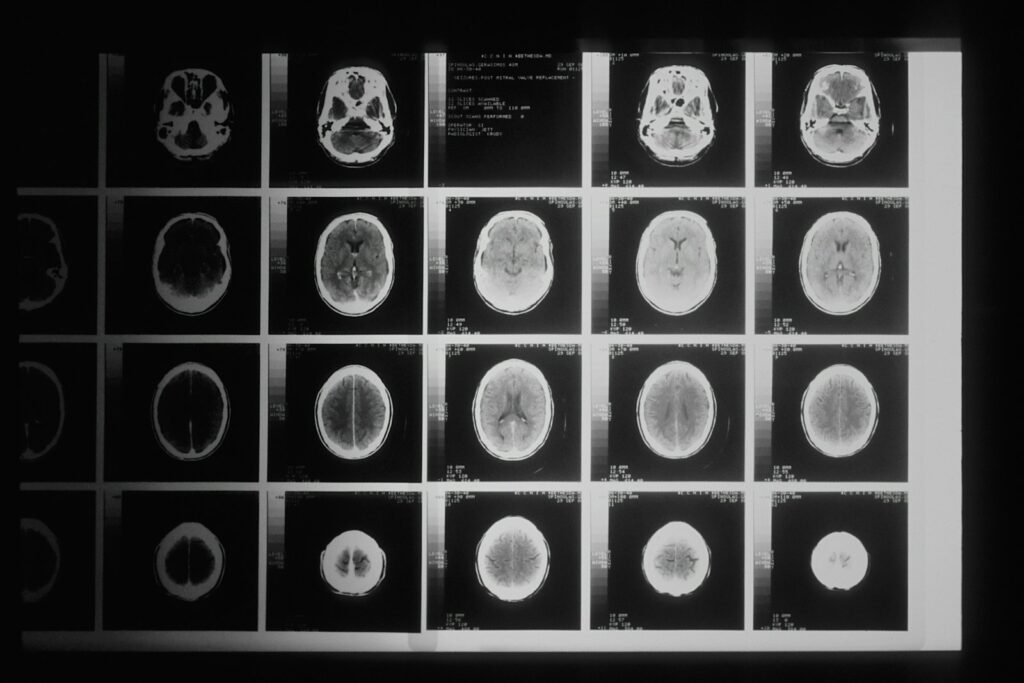
Your head hit the window in the collision, or the floor when you fell. The emergency doctor said it was “just a concussion,” the CT scan was clear, and you were sent home. Weeks later you still cannot read for more than a few minutes, bright light gives you headaches, and you keep losing your train of thought at work. You are not imagining it, and you are not alone.
What a concussion is
A concussion is a mild traumatic brain injury: a disruption of brain function caused by a blow or a sudden jolt to the head or body. Most people recover within weeks. A significant minority do not, and develop persistent symptoms that can last months or longer, sometimes called post-concussion syndrome.
Common symptoms include headaches, dizziness, sensitivity to light and noise, problems with memory and concentration, fatigue, sleep disruption, irritability, anxiety and low mood.
“Mild” describes the initial injury, not its effect on your life.
Why scans are usually normal
CT and standard MRI scans are designed to find bleeding, swelling and fractures. Most concussions do not cause any of those, so a normal scan is expected. Insurers sometimes treat a normal scan as proof that nothing is wrong. It is not. The diagnosis is clinical, based on how the injury happened, your symptoms, and the examination. Our post on proving injuries that do not show up on an X-ray explains how these claims are proven.
Accident benefits
After a car accident, insurers often try to place injuries within the Minor Injury Guideline, which limits treatment funding. Concussion is not one of the injuries the Guideline lists, and a brain injury diagnosis is often the basis for treatment outside it. Our post on the Minor Injury Guideline explains how to dispute that classification.
Medical, rehabilitation and attendant care benefits remain mandatory under every Ontario auto policy. Income replacement is now optional, so check what your policy includes. Our post on optional accident benefits explains what to look for.
More serious brain injuries can qualify as catastrophic, which opens up significantly higher benefit limits. Catastrophic status is assessed against specific criteria, so a brain injury claim should be assessed with that possibility in mind.
The lawsuit
In a car accident claim, compensation for pain and suffering requires an injury that passes the tort threshold: a permanent serious impairment of an important physical, mental or psychological function. Persistent cognitive problems that affect work, school or daily life can meet that test, but only with evidence. Our post on the tort threshold and deductible explains the test. For falls and other injuries, the threshold does not apply.
Evidence that matters
- Early documentation. Tell the emergency department, your family doctor and any treating provider about every symptom, including memory and mood changes, from the start.
- Neuropsychological testing. This measures attention, memory and processing speed against expected norms, and is often the most persuasive evidence in a concussion claim.
- Specialist assessment. Neurology, concussion clinics, vestibular physiotherapy and vision therapy all generate evidence of real deficits.
- Before-and-after evidence. Employers, teachers, coworkers and family can describe changes that you may not notice in yourself.
- Return-to-work records. Accommodations, reduced hours and failed returns show the impact.
Insurers often use surveillance and social media. A photo of you at a family event does not show how you felt afterwards, but inconsistencies will be used against you.
Children and students
Children and teenagers recover differently, and a concussion can affect schooling for a full year or more. School records, accommodations and teacher observations become important evidence.
Deadlines
Accident benefit notices start at seven days, written notice to an at-fault driver is due within 120 days, and the general limitation period for a lawsuit is two years. Brain injury symptoms can make deadlines easy to miss. Our post on limitation periods explains the rules.
How we can help
At Kabir & Alam, we represent people with concussion and brain injuries from car accidents, falls and other incidents, and we work with treating providers to document the injury properly from the start. Read more about our motor vehicle accident and personal injury practices, or book a consultation with us.
This post is general information about Ontario personal injury law and is not legal advice. Every case turns on its own facts. Speak with a lawyer about your situation before making decisions.