

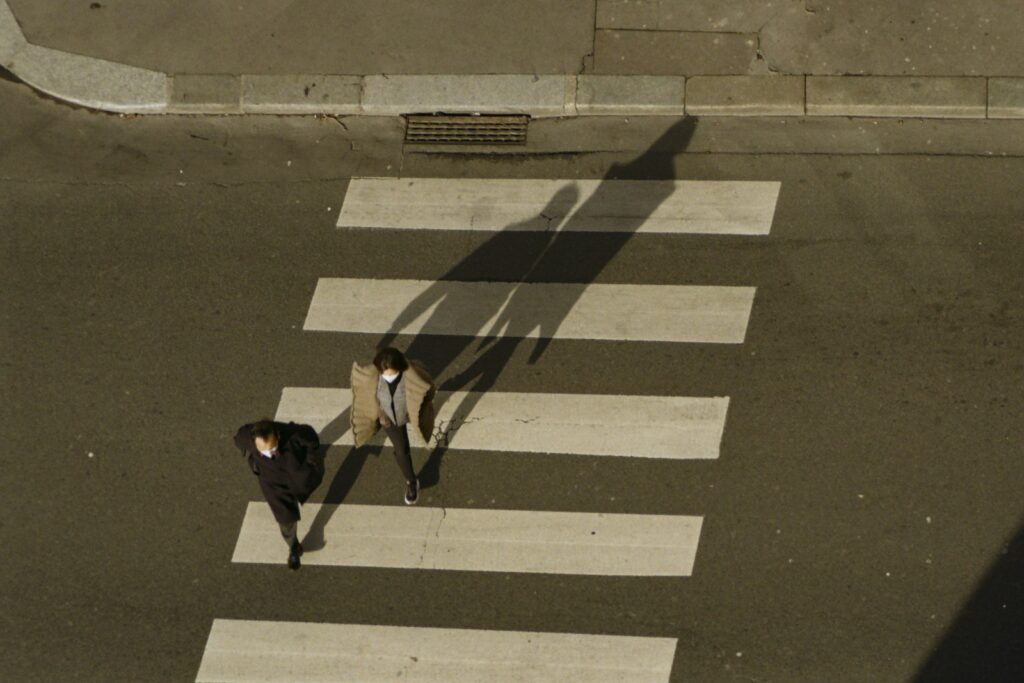
You were crossing the street, or riding in the bike lane, and a car hit you. You do not own a vehicle, you were not driving, and you assume the insurance system is built for drivers. It is, but it also covers you, and in one important respect the law treats a pedestrian or cyclist more favourably than it treats a driver.
The reverse onus
In an ordinary negligence claim, the injured person has to prove the other party was at fault. Ontario’s Highway Traffic Act changes that when a motor vehicle hits a pedestrian or cyclist. In that situation, the onus is reversed: the driver has to prove that the loss did not arise through their negligence or improper conduct. If the driver cannot, they are liable.
This does not mean the pedestrian is always found blameless. A court can still find contributory negligence, for example where someone stepped into traffic against a signal or was riding without lights at night, and reduce the damages by a share. But the starting point favours the person who was hit, and the driver’s insurer knows it.
You still receive accident benefits
Statutory accident benefits are available to anyone injured in a motor vehicle accident in Ontario, whether or not they own a car. The order of priority matters:
- If you have your own auto insurance policy, or are listed on one, or live with a spouse or family member who has one, that insurer is generally first in line.
- If not, the insurer of the vehicle that hit you is responsible for your benefits.
- If that vehicle was uninsured or cannot be identified, and no other policy applies, the provincial fund of last resort steps in.
Every Ontario auto policy includes medical, rehabilitation and attendant care benefits. Since July 1, 2026, other benefits, including income replacement and non-earner benefits, are optional. You can only claim them if they were purchased on a policy you are connected to as the named insured, their spouse or dependant, or a listed driver. A pedestrian or cyclist with no auto policy of their own is generally limited to the mandatory benefits. Our post on optional accident benefits explains what to check. We have written about what to do when accident benefits are denied and about how accident benefits and a tort claim run alongside each other.
The lawsuit
Beyond benefits, a pedestrian or cyclist can sue the driver for damages: pain and suffering, income loss, future care and other losses. The same threshold and deductible rules that apply to other Ontario car accident claims apply here, which we explain in our post on the tort threshold and statutory deductible. Pedestrian and cyclist injuries tend to be serious, and many meet the threshold, but it still has to be proven.
Hit and run
Pedestrian and cyclist collisions are, unfortunately, the ones most likely to involve a driver who leaves. If the driver is never identified, your accident benefits still flow through the priority order above. A claim for damages can be made against your own insurer under the uninsured and unidentified motorist provisions of your policy, or a family member’s policy, or, if there is none, against the provincial fund. Report the collision to police immediately and give them everything you have: partial plate, colour, direction of travel, any witnesses. Camera footage from nearby businesses and transit vehicles is often overwritten within days. We cover these claims in more detail in our post on uninsured and hit-and-run drivers.
Evidence that matters in these cases
The physical facts of a pedestrian collision are usually disputed: who had the light, how fast the car was going, whether the cyclist was in the lane. Photographs of the scene, the vehicle, your clothing and bicycle should be taken before anything is moved if at all possible. Get the driver’s name, licence, plate and insurer, and the names of witnesses. Keep your helmet, shoes and any damaged equipment. Ask for the police report number.
Then see a doctor, even if you feel able to walk away. Soft tissue and head injuries often show themselves the next day, and a medical record that starts on the day of the collision is far more persuasive than one that starts a week later.
Dealing with the driver’s insurer
The driver’s insurer may contact you quickly, sometimes with an early offer or a request for a recorded statement. You have no obligation to give a statement to the other driver’s insurer, and you should not accept an offer or sign a release before your injuries are understood and you have had advice. Your own insurer is different: you have a duty to cooperate with it for the purposes of your benefits claim, but that does not require you to volunteer opinions about fault. Our post on what to say when an adjuster calls goes through this in more detail.
Cyclists and equipment
Cyclists sometimes worry that not wearing a helmet, or a missing light, will end the claim. It will not. It may be raised as contributory negligence, and it may reduce damages if the missing equipment contributed to the injury, but the driver remains subject to the reverse onus and the claim proceeds.
How we can help
At Kabir & Alam, we represent pedestrians and cyclists in both the accident benefits claim and the lawsuit against the driver, and we take on the evidence-gathering early while it still exists. Read more about our motor vehicle accident practice or book a consultation with us.
This post is general information about Ontario personal injury law and is not legal advice. Every case turns on its own facts. Speak with a lawyer about your situation before making decisions.