

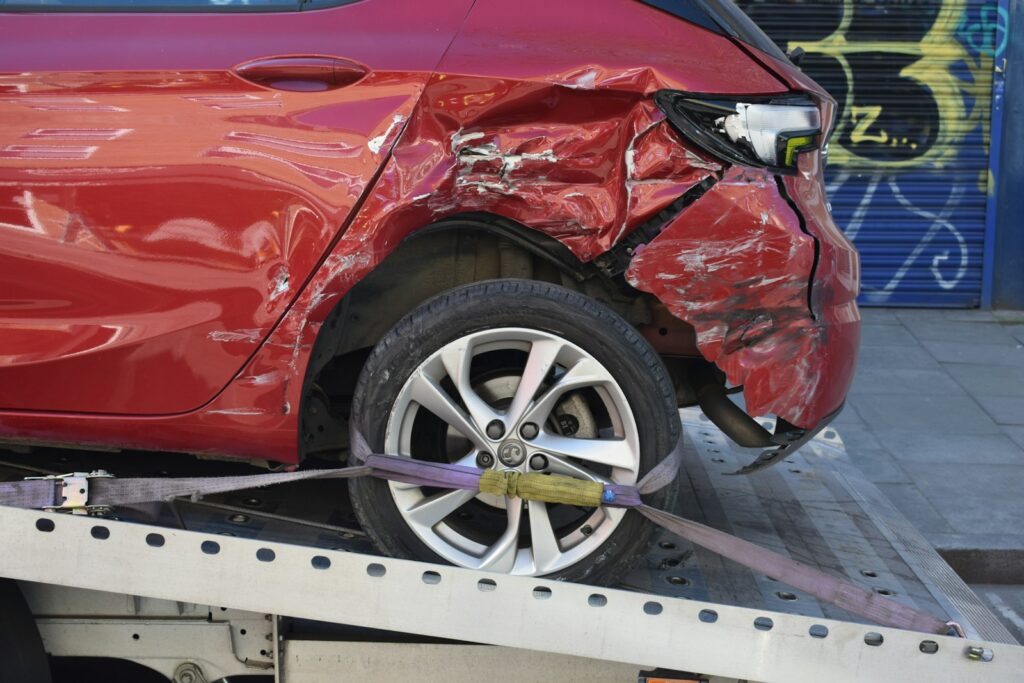
The police report confirms what you feared. The driver who caused the collision had no insurance. Or the driver left the scene and has not been found. Or the driver was insured, but only for the minimum, and your injuries are serious enough that the minimum will not come close. In each case the question is the same: if the person at fault cannot pay, does anyone?
In Ontario, the answer is usually yes, but the source of payment depends on your situation, and each source has its own rules and limits.
Accident benefits are not affected
Start with what does not change. Statutory accident benefits, which cover medical and rehabilitation costs, income replacement and other expenses, are paid without regard to fault and without regard to whether the other driver was insured. If you have your own policy, or live with someone who does, that insurer pays. If the vehicle you were in was insured, its insurer pays. If none of those applies, the provincial fund of last resort does. Whatever happened with the other driver, your benefits claim proceeds.
Your own policy: uninsured and unidentified motorist coverage
Every Ontario auto policy includes coverage for claims against uninsured drivers and unidentified drivers. If the at-fault driver had no insurance, or cannot be found, you can claim damages from your own insurer under this coverage, which stands in for the missing driver. The coverage has a fixed limit set by statute, which is modest relative to a serious injury, and the claim is subject to the same threshold and deductible rules as any other Ontario car accident lawsuit.
For unidentified drivers, there are also evidentiary requirements. You will generally need to have reported the collision to police promptly and to be able to corroborate that an unidentified vehicle was involved, through a witness, physical evidence or other independent proof. A claim based on your account alone can fail on this point, which is why reporting and preserving evidence immediately matters.
The family protection endorsement
Most Ontario drivers carry an optional endorsement, often called family protection coverage, that extends the limit of their own policy to protect them and their family members when the at-fault driver is uninsured, unidentified or underinsured. If your own policy has liability limits of one million dollars and the endorsement, and the at-fault driver has only the minimum, your insurer can make up the difference up to your own limit.
Whether you have this endorsement, and at what limit, is set out in your policy documents. It is one of the first things a lawyer will ask for. The endorsement has its own notice requirements and conditions, and claims under it are made against your own insurer, which then takes on the role of the defendant.
When the underinsured driver’s limit is reached
If the at-fault driver is insured but for less than your damages, the process usually involves settling with or obtaining judgment against the driver’s insurer up to its limit, then pursuing the balance under your own endorsement. The timing and sequence of these steps need care: settling with the at-fault driver without your own insurer’s consent can jeopardize the endorsement claim.
The fund of last resort
Where there is no policy at all to respond, the Motor Vehicle Accident Claims Fund, administered by the province, provides both accident benefits and compensation for damages, subject to its own limits and conditions. It is genuinely a last resort: it responds only when no insurance is available from any source, and it will look carefully for a policy before it pays.
If you were the passenger
Passengers in an uninsured vehicle can claim accident benefits through the priority order above, and can sue the at-fault driver, whether that is the driver of the car they were in or another vehicle. If the driver of your own vehicle was at fault and uninsured, your claim against them may be paid through your own policy’s uninsured coverage or, failing that, the fund. Knowingly riding in a vehicle you knew to be uninsured can affect entitlement, so this is an area where the specific facts matter.
What to do
Report the collision to police immediately, and get the report number. Note the plate, description and direction of travel of any vehicle that left. Get contact details for every witness. Notify your own insurer promptly, and ask for a copy of your full policy including endorsements. Do not sign a release or accept a payment from anyone until you know which coverages apply and what your injuries will require.
How we can help
At Kabir & Alam, we identify every available source of recovery after a collision, from your own policy’s endorsements to the fund of last resort, and we manage the sequence so that one claim does not compromise another. Read more about our motor vehicle accident practice or book a consultation with us, and bring your policy documents.
This post is general information about Ontario personal injury law and is not legal advice. Every case turns on its own facts. Speak with a lawyer about your situation before making decisions.