

You came to Canada as a student, a worker, or a visitor. You had no reason to fear returning when you arrived. Then something changed. A government fell or a crackdown began at home. Or you did something here that you could not have done there: joined a protest, spoke publicly, converted to another religion, came out, or posted online. Now going back is dangerous. A claim built on that is called a sur place claim, and it is a recognised part of refugee law, but it is assessed with a particular kind of scrutiny that anyone considering one should understand.
What sur place means
A person does not have to have fled their country to be a refugee. The definition looks at whether they face a well-founded fear of persecution if returned, and that fear can arise while they are already abroad. The UNHCR Handbook recognises two routes to this. The first is a change in circumstances in the home country after the person left. The second is the person’s own conduct abroad, where that conduct would expose them to persecution on return.
Canadian law accepts both. The Refugee Protection Division, and the officers who decide pre-removal risk assessments, assess sur place claims under the same definition as any other, with the same focus on whether the risk is real and forward-looking.
Where the scrutiny falls
The difficulty in sur place claims based on the claimant’s own activities is the suspicion that the activity was undertaken in order to create a claim. Decision-makers are entitled to ask whether the claimant’s beliefs are genuine, and whether the activity was a real expression of them or a performance for the record.
Two points from the case law matter here. First, the claimant’s motive is relevant to credibility, but it is not the end of the analysis. Even where activity abroad was partly self-serving, the question remains whether the authorities at home would persecute the person because of it. A regime that punishes anyone photographed at an opposition rally does not check the protester’s sincerity first. Second, the risk has to be assessed on the evidence about the home state, meaning whether it monitors the diaspora, whether it has reacted to similar conduct by returnees, and whether this claimant’s conduct is visible or likely to become known.
So the claim has two parts that must both be proven: that the conduct or the change of circumstances is real, and that the state would respond to it.
Common sur place situations
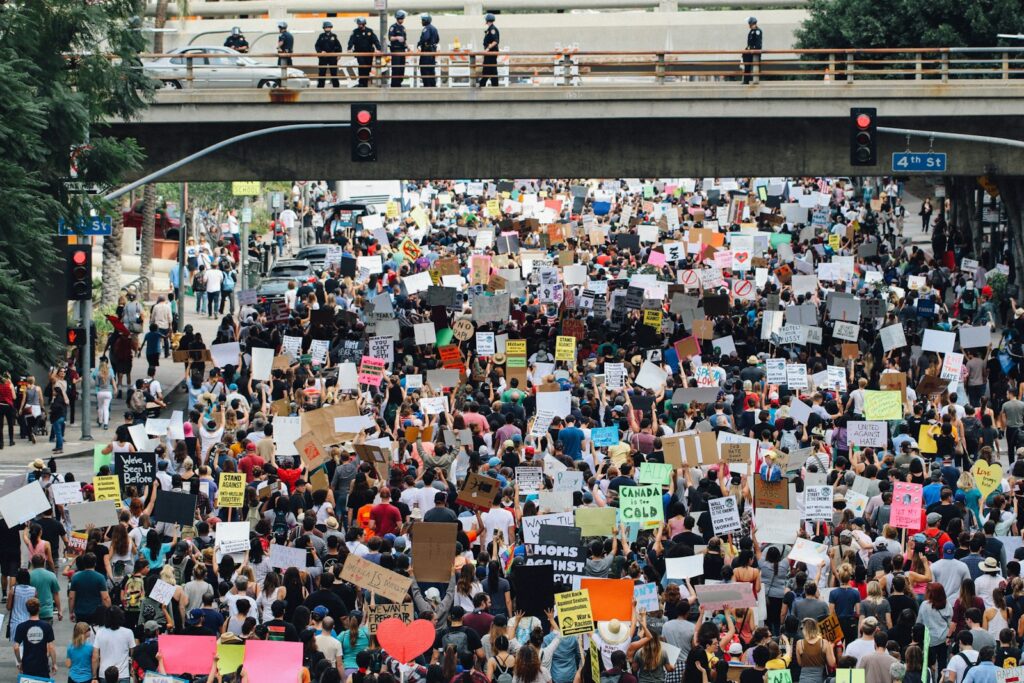
- Political activity in Canada. Protests, organising, public statements, or social media directed at the home government, particularly where the state is known to monitor overseas nationals.
- Religious conversion. Conversion away from the majority religion in countries where apostasy carries legal or social penalties. Decision-makers look closely at the genuineness of the conversion, the claimant’s knowledge of the faith, and their practice.
- Sexual orientation and gender identity. A person who has lived openly in Canada in a way that was impossible at home, and who would be at risk if that became known.
- Family association. A relative’s activity or a relative’s claim creating risk by association.
- Change in the home country. A coup, a new law, or a targeted campaign against a group the claimant belongs to.
Evidence that decides these cases
Sur place claims live or die on documentation of the two parts described above.
For the claimant’s own conduct: dated photographs and video of attendance at events, copies of posts with timestamps and audience information, letters from organisations confirming membership and participation, and where relevant baptismal or membership records with letters from clergy describing the claimant’s involvement over time. Consistency matters. A claimant who describes deep religious conviction but cannot answer basic questions about the faith, or who joined every event in the month before the hearing and none before, will have difficulty.
For the state’s response: objective country evidence on surveillance of the diaspora, on the treatment of returnees who engaged in similar conduct, and on the legal penalties that apply. Expert evidence can be valuable where the country documentation is thin. The claimant’s own profile matters too: a person with a prior record of interest from the authorities, or with family who have already been questioned, is in a stronger position than someone with no history.
Our post on common mistakes that lead to refusal applies with particular force here, because the credibility questions are sharper. So does our post on how the RPD assesses credibility.
Timing, and the one-year bar
This is where sur place claimants have been hit hardest by recent changes. Under the eligibility rules that came into force with Bill C-12, a claim made more than one year after the claimant’s first entry into Canada is not referred to the Refugee Protection Division. The people most affected are exactly the people who make sur place claims: students and workers who have been here for years and whose risk arose recently.
A claimant caught by the bar is not without recourse. The claim is diverted to a pre-removal risk assessment, where the same risk is assessed on paper, and where a hearing may be held if credibility is central. But the process is different, the procedural protections are thinner, and the written record carries the whole case. We have written separately about PRRA applications and about what counts as new evidence on a PRRA.
For a claimant who is still inside the one-year window, the practical point is that delay has a cost. A claim made promptly after the risk arises is both eligible for a hearing and more credible.
Before you claim
Whether a sur place claim is viable, and which process will decide it, should both be assessed before anything is filed, because the eligibility rules turn on dates that cannot be changed afterwards. Read more about our refugee law practice, or book a consultation with Kabir & Alam Lawyers. If you have been in Canada close to a year, say so when you book.