


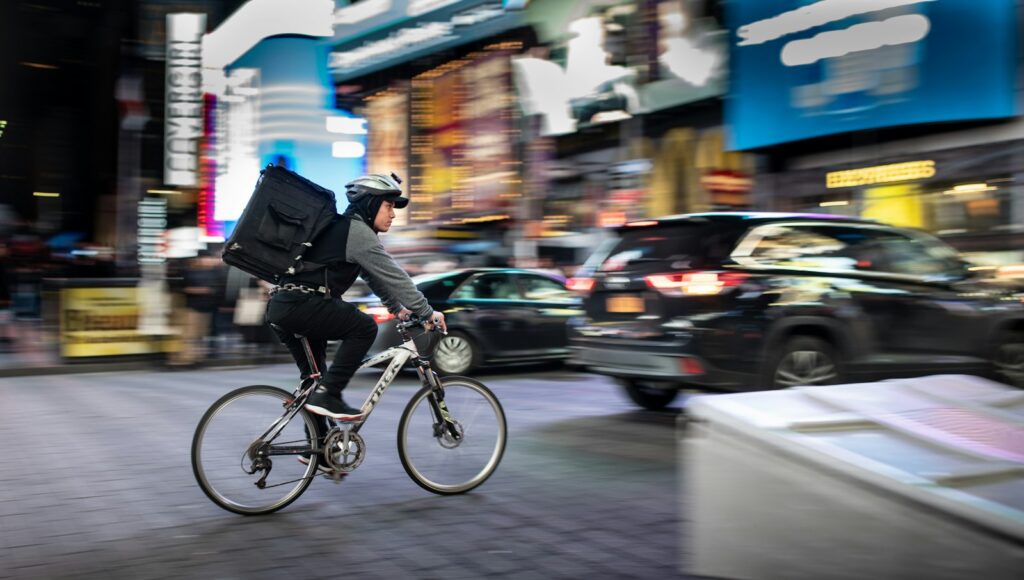
You deliver food on an e-bike between classes. A driver turns without looking, and you end up with a broken wrist and a concussion. You cannot ride, you cannot work, and you are not sure who is responsible for paying for anything. If you are on a study permit or an employer-specific work permit, there is a second question most injury lawyers will not raise: what your claim for lost income could reveal to immigration authorities.
Accident benefits after July 1, 2026
If a car was involved, you can claim accident benefits. Since July 1, 2026, most accident benefits in Ontario are optional. E-bike and e-scooter riders who do not have their own auto insurance are generally limited to the mandatory benefits: medical, rehabilitation and attendant care. Optional benefits the driver purchased are generally not available to you.
In practice, most student couriers on e-bikes will not receive income replacement from an auto insurer. Our post on optional accident benefits explains the change, and our post on pedestrian and cyclist claims explains how the insurer is chosen.
If you deliver by car, check your auto policy. Personal policies often exclude commercial delivery, and a gap in coverage can affect both your own claim and anyone you injure.
Workers’ compensation and platform insurance
Whether workers’ compensation applies depends on how the platform is classified and registered with the WSIB, and on how you deliver. Couriers who deliver on foot or by bicycle have been treated differently from those who deliver by car. Some platforms also carry their own accident insurance for couriers, separate from the WSIB.
Check the platform’s terms, report the injury through the app, and ask in writing what coverage applies. Our post on workplace injuries explains how the WSIB system works when it does apply.
The lawsuit
If another driver caused the collision, you can sue them for pain and suffering, lost income, and future losses. With fewer accident benefits available, the lawsuit is now often the main source of compensation for anyone hit on an e-bike. The at-fault driver must be given written notice within 120 days, and the claim generally must be started within two years. Our post on accident benefits and tort claims explains how the two work together.
The immigration risk in a lost income claim
To claim lost income, you must prove what you were earning. For a student, that proof can create a problem.
International students can generally work off campus up to 24 hours a week during academic sessions. Gig delivery counts as off-campus work. Delivery income is visible in app records and tax filings, and IRCC can ask for tax records to check whether a student complied with the conditions of their permit. Earnings that suggest you worked more than the limit can lead to questions about compliance, which can affect future study permit extensions, a post-graduation work permit and permanent residence. Work done while studying full time generally does not count toward Canadian Experience Class requirements either.
Workers on employer-specific permits face a similar issue. Delivery work for a platform is usually not authorized by a permit tied to a different employer.
This does not mean you should drop the income claim or understate your earnings. Misstating income in a lawsuit is a serious problem of its own. It means the claim should be prepared by someone who understands both sides, before any income evidence is filed.
If you are a victim of the collision
You were injured by someone else’s negligence. Your immigration status does not take away your right to compensation. Get treatment, keep records, and get advice early. Our post on injuries on a work permit or as a visitor covers what happens if your status expires while the claim is ongoing.
How we can help
Kabir & Alam practises both personal injury and immigration law. We can pursue the accident claim and assess the immigration consequences at the same time, so one does not undermine the other. Read more about our motor vehicle accident and work permits practices, or book a consultation with us.
This post is general information about Ontario personal injury and Canadian immigration law and is not legal advice. Every case turns on its own facts. Speak with a lawyer about your situation before making decisions.