


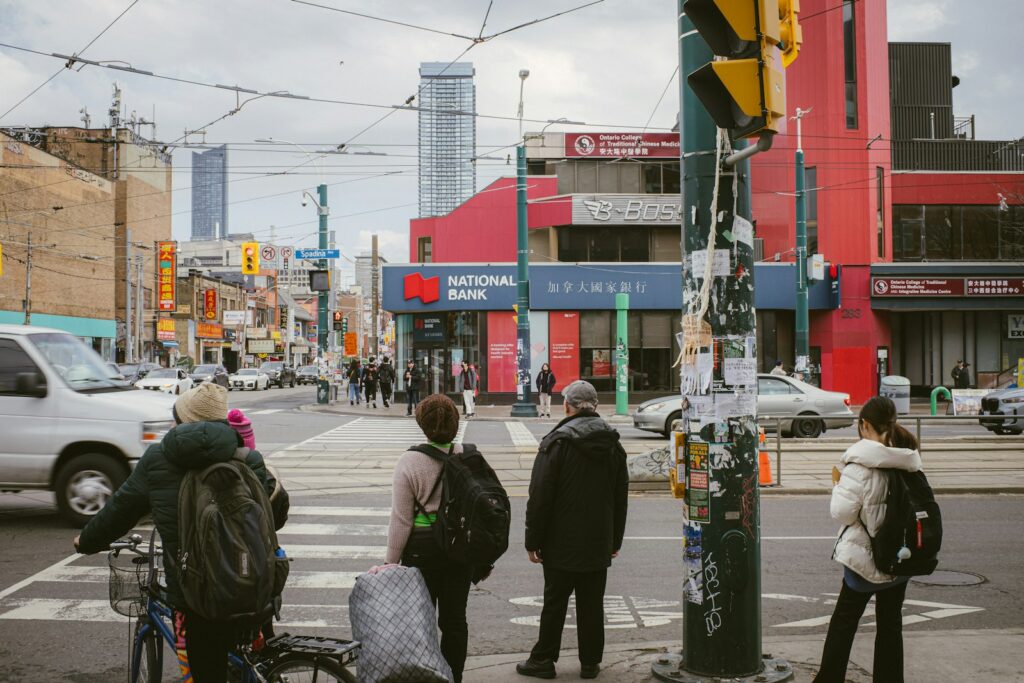
You were hit by a car crossing the street, or hurt in a fall at work. You do not have valid immigration status, or you are waiting on a refugee claim or an H&C application. You need treatment and you cannot work, but you are afraid that making a claim will bring your status to the attention of the authorities. Many people in this situation do nothing. That is usually the wrong choice, but there are real risks to understand first.
Your status does not cancel your right to compensation
Ontario personal injury law protects people regardless of citizenship or immigration status. If someone else’s negligence injured you, you can generally sue them. If you were injured in a car accident, you can generally claim accident benefits from an insurer.
Where no one else’s policy applies, your claim for accident benefits usually goes to the insurer of a vehicle involved in the collision. Our posts on pedestrian and cyclist claims and optional accident benefits explain how insurers are chosen and what you can claim.
The Motor Vehicle Accident Claims Fund trap
There is one important exception. When there is no insurance at all, for example with an uninsured or unidentified hit-and-run driver, the claim goes to the Motor Vehicle Accident Claims Fund, Ontario’s payer of last resort. The Fund pays people who are “ordinarily resident” in Ontario.
In 2016, the Ontario Court of Appeal upheld a decision refusing a man living in Ontario without status any compensation from the Fund after a hit-and-run, because he was not ordinarily resident in the province. The case turned on its facts, but it shows how status can matter in exactly the situations where people have the fewest alternatives. Our post on uninsured and hit-and-run drivers explains how Fund claims work.
Lost income is the hard part
Claims for lost income need proof of earnings. For people working without authorization, that proof may be cash payments with no records. It may also show work in breach of immigration rules. A court or insurer may question or reduce an income claim based on unauthorized work. Putting evidence of that work into a legal record can also affect a future immigration application.
Future income loss raises a separate issue. Courts assessing future losses may consider where the injured person is likely to live and work in future, which can bring immigration status into the lawsuit directly.
None of this means you should hide or misstate your work history. False evidence in a lawsuit is far more dangerous than unauthorized work. It means the income claim needs to be planned with both the injury claim and the immigration position in mind.
Health care while you recover
Without OHIP, treatment is often the most immediate problem. After a car accident, auto insurance now generally pays first for medical and rehabilitation expenses. Refugee claimants may have coverage through the Interim Federal Health Program. For other injuries, some community health centres serve people without coverage.
Will reporting the accident lead to the CBSA?
This is the question most people are afraid to ask. Toronto has policies limiting when city services ask about immigration status. The Toronto police have a policy about asking victims and witnesses about status. These policies reduce the risk, but they are not a guarantee, and they do not bind the CBSA or every agency you may deal with.
A lawyer can help you understand the risks in your specific situation before you make statements to police, insurers or anyone else.
Your injury may matter to your immigration case
Being injured does not only create risk. A serious injury, the need for ongoing treatment in Canada, and your ties here can all be relevant to an H&C application. Settlement money can also affect some immigration applications, as we explain in our post on what a settlement means for your immigration application.
Deadlines still apply
Limitation periods run regardless of your status. The general deadline to sue is two years, and accident benefit notices start at seven days. Waiting until your immigration situation is resolved can cost you the claim entirely. Our post on limitation periods explains the rules.
How we can help
Kabir & Alam practises both immigration and personal injury law, so we can assess the injury claim and the immigration consequences together, before anything is filed. Read more about our personal injury and H&C work, or book a consultation with us. Consultations are confidential.
This post is general information about Ontario personal injury and Canadian immigration law and is not legal advice. Every case turns on its own facts. Speak with a lawyer about your situation before making decisions.